 +90 (539) 113 58 33



Fill in the form
And we will give you free advice on purchasing real estate in Northerh Cyprus




05 April 2024
The three jewels of Northern Cyprus are three medieval castles located in the mountains of Kyrenia: St. Hilarion Castle, Kantara Fortress, and Buffavento Castle. The name “Buffavento” means “protected from the wind” in Italian, and indeed the castle, built in the mountains 960 meters above sea level, is so mysterious that the wind is still its faithful companion.
According to historical records, Buffavento Castle was built between the 7th and 11th centuries, during the time when Cyprus was ruled by the self-proclaimed Emperor Isaac Comnenus. It was primarily an observation outpost, and a signal system was established with neighboring castles. The castle practically did not take part in battles. Only once in its history was the castle besieged and attacked. This happened when Richard the Lionheart captured Cyprus and executed Isaac Comnenus. All three castles came into the possession of the European Lusignan family. In 1192, Guy de Lusignan became lord of Cyprus, and even later, his brother Amaury took the royal throne and turned Buffavento Castle into a prison. Baron Pierre de Montalife was imprisoned within its walls, among others, and attempted to escape. The attempt almost succeeded – the baron overcame a dangerous descent but was caught by the royal guard and subsequently convicted and executed. It should be noted that Cyprus was under the rule of the Lusignans for more than a century, and at that time, Buffavento Castle was at its peak of prosperity. This is when it took its final shape. After the reign of the Lusignans, by the 15th century, the castle was taken over by the Venetians, but they did not use the structure for strategic purposes. Gradually, the castle began to lose its former grandeur and was destroyed by natural forces. In the middle of the 16th century, Cyprus was invaded by the Ottomans, and the castles on the Kyrenia Ridge finally fell into disrepair.
The history of every medieval castle is steeped in legends, secrets, and mysteries. Buffavento Castle is no exception. There are three legends about the castle, which are tempting to believe. The first legend tells of the strong love a father has for his daughter. Isaac Comnenus, the self-proclaimed ruler of Cyprus, was holding the island’s defenses against a European attack led by Richard the Lionheart, who, in anticipation of his imminent victory, sent a delegation to the island with an offer to surrender. The head of the delegation was Guy de Lusignan, the future Signor of Cyprus, a handsome man whom women were crazy about. When the delegation of Europeans arrived at Buffavento Castle, somehow the young daughter of Comnenus noticed Guy de Lusignan. At first sight, she fell in love with the handsome Frenchman, and this foreshadowed the fate of the whole of Cyprus and the castle of Buffavento in particular. At the persuasion of his favorite daughter, the issue of the capture of the castle was resolved without a fight and bloodshed; the father surrendered the fortress, and then the whole island. Further, his fate was deplorable: the new ruler imprisoned Comnenus and, according to some sources, executed him. Other sources claim that Comnenus managed to escape. Also, in history, there is no information on whether the relations of Lusignan and the daughter of Comnenus were formed – this mystery is covered with darkness to this day. Most likely not – because at the time of the capture of Cyprus, Guy de Lusignan was already married to the co-ruler of Israel – Sibylla. The second legend is deeply religious and tells about the miraculousness of the place on which the castle is built. Once, a noble lady and her dog came to the castle. Both were sick with leprosy. But as time went by, the woman, who let her pet out for a walk, noticed that the scabs and sores on the animal were getting smaller and smaller. She followed the animal and discovered that it was going to a spring coming out of the rocks in the vicinity of the castle. Bathing in the baths of this spring helped the woman to forget about her ailment forever. As the spring was recognized as a miracle-working spring, a monastery was built on its place, which is now, unfortunately, closed – it is located on the territory of a military base. The third legend is truly mystical and causes controversy among historians and local residents of Cyprus, as none of them can decide which of the three castles – Buffavento, Kantara, or Hilarion – it refers to. It says that, allegedly, when the castle of Buffavento was being built, one hundred rooms were designed, and the one hundred and first room was made secret. A huge amount of treasure was hidden there, but nobody could find it. According to legend, whoever enters the 101st room will become a very rich man, but history still does not know the owner of this lucky treasure.
The architecture of the castle is quite interesting, but the first thing that attracts the attention of the tourist is the location. Climbing up the mountain today, one can hardly imagine how the building materials for the construction of the castle were transported to such a height, as there were no lifting mechanisms at that time. This castle is considered to be the most impregnable in Northern Cyprus. This is evidenced by the fact that no fortress wall was built around it – there was simply no need for one: the cliffs near the castle were so steep that it was impossible to attack in this area. The layout of the castle is quite interesting; it is located on two levels. The first level is a bastion with an entrance gate. In this bastion, in the guard room, there is a fireplace, which can still be used if you bring wood with you. On the highest point of the castle, there are the remains of a Byzantine chapel, and in one of the churches of the castle, there is an inscription mentioning the Byzantine governor Filokalis. The mouth of a small spring, which once ran through the rocks on the castle grounds, was used by the ancient settlers to collect drinking water. On the lower level, there are still remains of the tank where it was collected along with the site of the spring. At present, no scientific research is carried out on the territory of the castle. This place does not enjoy the active attention of tourists, but visiting it can be a real test of strength, a great opportunity to feel the power and majesty of the high mountains.
Today, Buffavento Castle is a ruin that reminds you of the luxury of earlier days. The way to the castle is a narrow 4 km long dirt road, where, on one side, large boulders and rock walls create the illusion of a fairy-tale place, and on the other side, there is a deep abyss. The ascent takes about 40-50 minutes, and it is quite difficult, so it is necessary to wear comfortable shoes and take drinking water with you. Also, it is recommended to go on a trip during the cooler parts of the day to avoid sunstroke, as admiring the beauty might not be possible. Late in the evening is also very beautiful here, but if you go at this time of day, you should try to leave the place before dark because the mountain road leading to the castle is very steep and dangerous. Not all people who come to this place dare to go to the top, but those who make it to the castle will forget about everything. The conquerors of the heights will see the Mediterranean Sea, Kyrenia, the Karpas Peninsula, the Gulf of Famagusta, the mountain range with Mount Beşparmak, and the Turkish Taurus Mountains visible across the sea. Looking at this incredible panorama, which covers a huge space, you will truly experience a different reality and reassess your priorities and values. At present, there are no scientific researches on the territory of the castle. Visiting the castle is free of charge. This place does not enjoy the active attention of tourists, but visiting it can be a real test of strength, a great opportunity to feel the power and majesty of the high mountains.
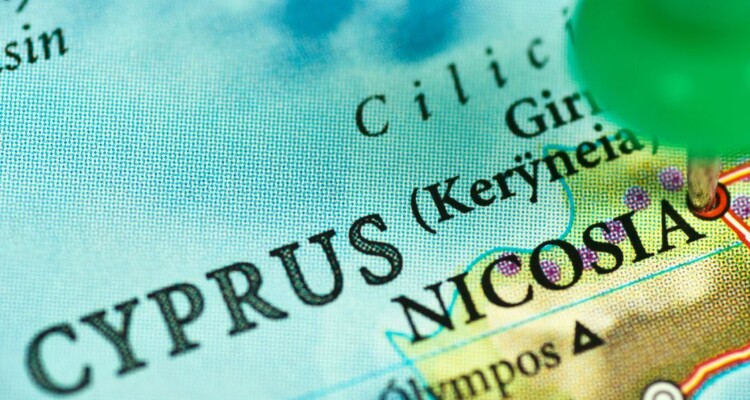
Buffavento Castle is located on a mountain range in the Kyrenia region. There are two ways to get there: by car or by sightseeing bus. You can find the location on the map at these coordinates: 35°17’06.5″N 33°24’39.6″E. On the asphalted road, you can see a yellow-colored signpost, after which there will be gravel pavement and serpentine. You will have to drive 5-6 kilometers between the wall of mountains and the abyss, hoping that there will be no oncoming cars on the way.
 Share in
And we will give you free advice on purchasing real estate in Northerh Cyprus